

Digital Humanities Courses
The Center for Digital Humanities offers several undergraduate and graduate level courses designed to provide students with a range of Digital Humanities tools and skills. Learn more about these courses below:
Upcoming Classes – Enroll Today!
Winter Intercession (Jan 5-16, 2026)
Hum 695: Internship in Digital Humanities
(Dr. Courtney Luckhardt)
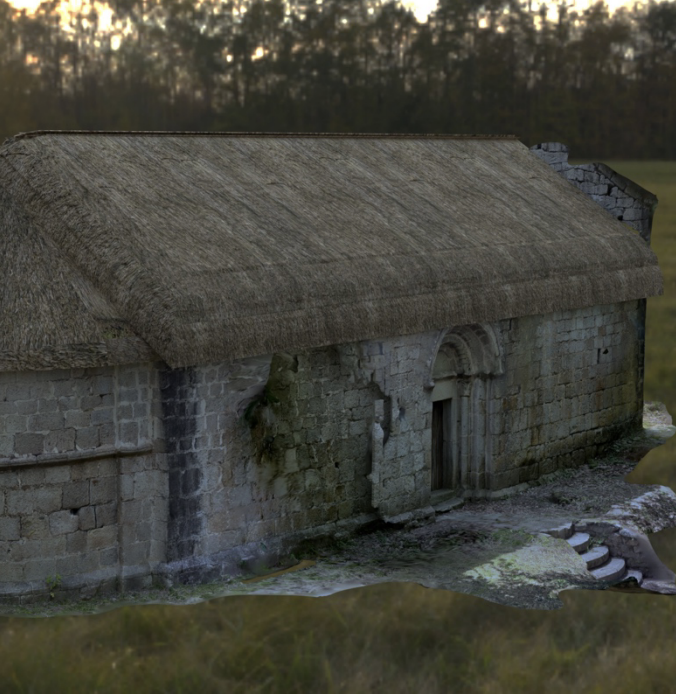
This internship course in Digital Humanities explores photogrammetry and LiDAR scanning, advanced techniques for creating detailed 3D models from photographs and laser scans for archival digitization, cultural heritage preservation, historical exploration, and humanities applications for innovative technology. Participants will engage in advanced hardware and software, including handheld 3D scanners, photogrammetry drones, 3D printers, acquiring the skills to capture, process, and reconstruct archival/heritage artifacts and sites.
In addition to 3 units of graduate credit, enrolled students will receive a $300 stipend for their work in this internship. Course counts towards the badge in Digital Humanities. 10 students max.
Spring 2026 – T/TH 9:30-10:45am
HIS 306: History in the Digital Age
(Dr. Jen Andrella)
This course explores how digital methods, tools, and publications can help us ask and answer questions about the past. We will work together to build a versatile skillset in areas such as data visualization, digital archiving and exhibit design, content management, text analysis, digital mapping, video gaming, web publishing, and audio/visual production.
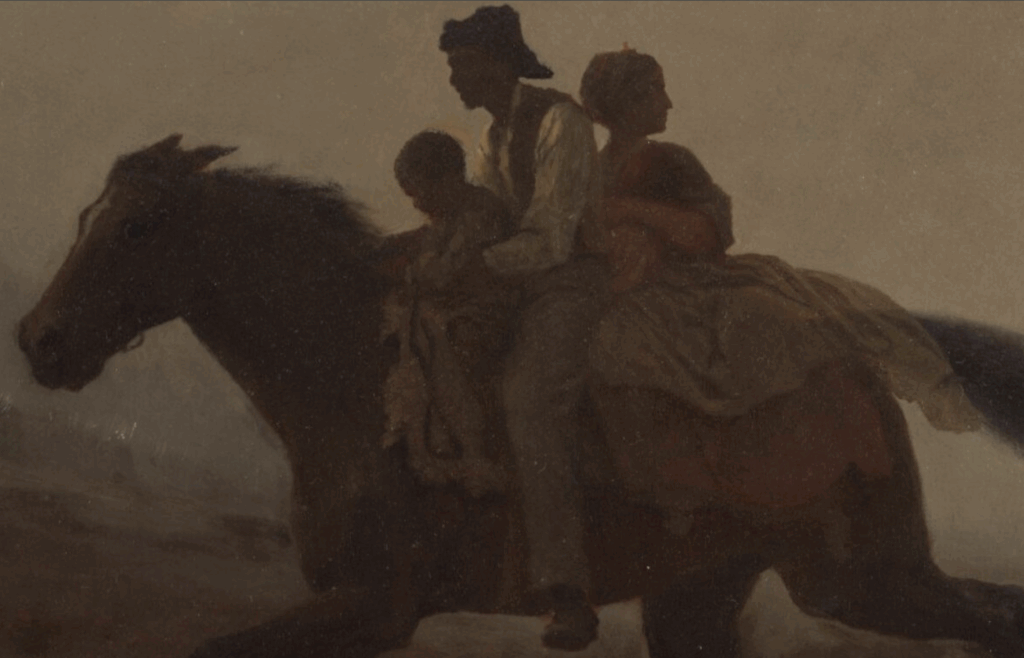
This course will focus on applying digital methods to the study of trans-Atlantic and U.S. slavery. Students will engage with data, material culture, texts, audiovisual media, oral histories, architecture, memorialization, and traditions to examine the implications of digital access, communication, and storytelling in the preservation and presentation of this history.
Spring 2026 – T/Th 2:30-3:45pm
HUM 402/502: Digital Humanities Practicum
(Dr. Jen Andrella)
In this course, students will work collaboratively on a Digital Humanities project while learning digital methods, community-engaged best practices, and archival research. We will engage in the entire process of constructing a digital project, from idea to public launch. Through this course, students will gain valuable skills in web authoring, team-based learning, and project management. By working closely with local archives, special collections, and/or community partners, students will explore how the digital humanities can connect scholarship with public audiences in meaningful ways.
Undergraduate Course Descriptions
English 365: Digital Literacies
How does technology change the way we read, write, think, and communicate? How does technology influence behaviors and actions? Technology is a meaning-making, community-building tool. In this class, students will consider what that means for us and our communities.
ENG 365 explores the advantages and disadvantages of technology. This course will focus on texts, images, audio, design, access, information, and data. Additionally, the class will study various digital mediums and platforms, how information gets produced and circulates in digital environments, and reflect on how individuals create, innovate, design, and use images and audio to communicate.
This course is worth three (3) credit hours.
History 306: History in the Digital Age
The digital humanities, and digital history in particular, has revolutionized the way we study and learn about history. Data mining, digitization, and Geographic Information Systems have changed how we gather and analyze data, while sites like Wikipedia, blogs, open-access journals, and social media are transforming traditional publishing.
This course engages with these cutting-edge developments by introducing students to digital history and the ways in which technology has transformed how we can share history with public audiences.
Topics vary by instructor and semester, but can include digital exhibits, crowdsourcing, podcasting, data mining, and gaming, among others.
This course is worth three (3) credit hours.
Humanities 402: Digital Humanities Practicum
Modeled after the sciences, this apprenticeship-style course will assist students in developing advanced skills in a specific DH methodology by working on a sophisticated, grant-funded faculty research project. Students will receive full contributor credit for their work while also contributing to the research mission of the university.
This course has no prerequisites and is worth three (3) credit hours.
Graduate Course Descriptions
Humanities 501: Introduction to Digital Humanities
This course provides students with an introduction to the field of Digital Humanities (DH), namely a broad understanding of DH skills, such as text and network analysis, metadata methods, digitization, and mapping.Students will master new forms of humanities writing and communication for the public such as blogging, podcasts, and wikis that encourage accessibility within and beyond academia.This course is held virtually (either synchronously or asynchronously) and is worth three (3) credit hours.
Humanities 502: Digital Humanities Practicum
Modeled after the sciences, this apprenticeship-style course will assist students in developing advanced skills in a specific DH methodology by working on a sophisticated, grant-funded faculty research project. Students will receive full contributor credit for their work while also contributing to the research mission of the university.
This course has no prerequisites and is worth three (3) credit hours.
Humanities 695: Internship in Digital & Public Humanities
During this supervised internship course, students gain experience by working on a USM faculty member’s digital and/or public humanities project. This course emphasizes interdisciplinary research methods, technical skills, project management, and experiential learning.
This course has no prerequisites and is worth three (3) credit hours, but can be repeated up to six (6) hours.
A Note on HUM 501 and HUM 502
HUM 501 and HUM 502 are interdisciplinary courses that either partially or completely fulfill several degree and/or certificate program requirements at The University of Southern Mississippi, including:
- 6 hours of electives for MLIS Archive and Special Collections Graduate Certificate.
- 6 hours of electives toward the Public History Graduate Certificate.
- 6-hour Allied Field requirement in the English graduate program.
- 6-hour graduate research tool in the History graduate program.